Center for Treatment of Cerebral Metastases

What are brain metastases and why do they require immediate treatment?

Brain metastases usually originate from lung cancer, breast cancer, melanoma and require immediate treatment. Without treatment, the survival of patients is extremely limited and ranges from three to six months, depending on the severity of the symptoms and the size of the metastases.

From the moment they are diagnosed, immediate and targeted therapeutic intervention is absolutely necessary. In neuro-oncology, the goal is not only to prolong life, but also to preserve its quality.

Why would one prefer radiosurgery over other treatments for brain metastases?

The main reason is that radiosurgery:

  • • It is Painlessand Bloodless
  • • OffersHigh Accuracy(under a millimeter)
  • Protects healthy brain tissue
  • • Gives better local control of the disease
  • • Accompanied by much better quality of lifefor the patient
  • • Does not affect other healthy areas

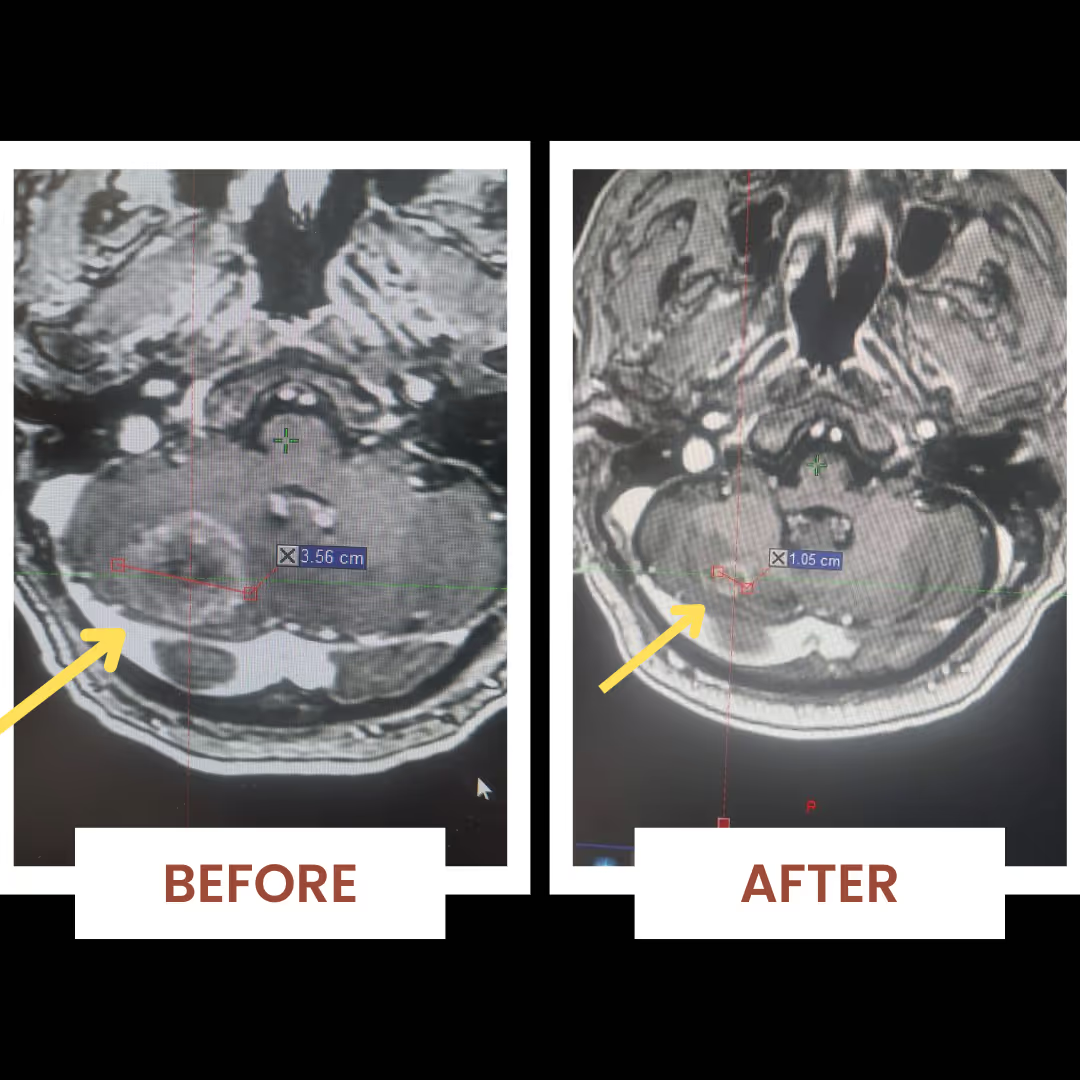
Radiosurgery now considered radical treatmentfor brain metastases, with success rates exceeding 97%.
Learn more
Contact

Need more information?

Fill in the form

What are the advantages of Radiosurgery?

It is aimed at patients
Painless— no pain during or after the session
Safe
Bloodless
Short — irradiation lasts a maximum of 10 minutes
No hospitalization - the patient comes and leaves on the same day, without any need for hospitalization
With fewer & milder side effects

- VIDEO -

What you need to know about brain metastases

Contact

Need more information?

Fill in the form

What are the steps:

01

EVALUATION PATIENT

• A detailed discussion of the attending physician with the patient, evaluation of his medical record and imaging tests (MRI) is carried out.

• The aim is to assess whether the patient is a suitable candidate for radiosurgical treatment.

• Upon completion of the evaluation, the start of the therapeutic process is determined.

02

EMULATION

• The simulation is performed, which includes a CT scan at the treatment site and an MRI, to accurately determine the target.

• Personalized thermoplastic immobilization mask is manufactured, on the patient's face.

• The mask ensures complete immobilization during treatment and allows for the required radiation targeting accuracy (< 1 mm).

03

DESIGN

• After the simulation, the attending physician proceeds to plan the treatment by determining the area of metastasis or metastases (target), but also the healthy anatomical structures of the brain (e.g. optic nerves, stem) that should be protected.

• Radiophysicists prepare the treatment plan, with which the treatment will be carried out safely and successfully.

04

TREATMENT

• With the help of visual confirmation, the patient is placed on the linear accelerator, in exactly the same position as in the simulation.

Treatment begins and ends in approximately 15 minutes.

• During it, the patient's position is constantly checked.

• In case of minimal movement, the radiation administration is automatically stopped and the patient is returned to his original position.

-We stand by your side-

Why choose St. Luke's Hospital?

Specialized Center

The services are provided by the scientifically responsible orthopedic surgeon, in collaboration with a multidisciplinary team of doctors, biologists, nurses, physiotherapists and gymnasts. The integrated framework of the clinic with a specialized team of scientists is our duty to the patients who trust us.

Modern and certified equipment

The Orthopaedic Clinic of Regenerative Medicine is equipped with modern and excellent machines for the application of the methods of regenerative medicine. The materials used for the manufacture of stem cells and PRPs are certified and manufactured in Germany and Switzerland.

Safety and Effectiveness

The main advantage is that these treatments, being biological, are not a medicine, as a result of which they are the safest that can be applied. They also do not simply aim to mask the symptoms, but enhance the body's ability to heal. Thus, they are an alternative, without side effects, to accelerate the healing of the affected tissue and in many cases avoid an upcoming surgery.

Guidance after treatment

Even after treatment, we are constantly next to the patient. Usually, a physiotherapy program is given with instructions to the physical therapist. The program is individualized for each condition and tailored to the needs of the particular patient. Finally, we carry out regular rechecks to assess the improvement objectively.


- Medical Staff -

Our people

“Radiosurgery is currently the method of choice for treating brain metastases, and this is not just a trend or choice of preference — it is the result of dozens of international studies that have made radiosurgery the new gold standard in the treatment of brain metastatic disease.”

- Dr. Christos Boskos, Radiation Therapist - Oncologist


Stereotactic Radiosurgery Specialist Team
Radiosurgery' has extensive experience with over 3,000 treatmentsguaranteeing the success and safety of treatment.

*In fact, in the Clinic “AGIOS LOUKAS” the treatment fully coveredfrom the EOPYU, as well as from private insurance companies.

- INCIDENTS -

Patients treated in our Hospital

Contact

Need more information?

Fill in the form

FAQs

How can I make an appointment or be informed about the treatment process for brain metastases?

You can contact us by phone at +30 2310 380005 to schedule your appointment or to receive detailed information from our team.

Why is the situation considered urgent when brain metastases are detected?

Brain metastases are treated as an absolute priority, regardless of the initial cancer focus. Wherever a primary tumor is found, when brain metastases are found, the approach changes radically: first these metastases should be treated, and then any other treatment should be continued.

The effects of infiltration and compression of the healthy brain by metastases and accompanying edema are rapidly devastating to the quality of life and directly affect the survival of the patient.

What are brain metastases?

Brain metastases are cancer cells that have moved from a primary tumor to another part of the body to the brain and form new foci in the nervous system.

What are the most common symptoms of brain metastases?

Symptoms may include severe headache, limb weakness, difficulty speaking, instability, changes in vision or seizures, depending on the location of the metastases.

What are the available treatments for brain metastases?

Options include surgical removal, radiation therapy, chemotherapy or immunotherapy, and radiation surgery. Treatment is selected individually based on the characteristics of the disease.

What types of cancer are those that usually metastasize to the brain?

The decision to undergo an operation, as well as the choice of the doctor who will perform it, is one of the most serious that you will be asked to take around your health.

Thanks to new systemic treatments, patients live longer, resulting in brain metastases even years after diagnosis.

This reflects both progress in treatment and the need for specialized local treatment of these metastases.

What is the prognosis of a patient with brain metastases with or without treatment?

The number and location of lesions, as well as the general condition of the patient, are predictors of his survival and quality of life.

With the administration of only decongestant therapy (cortisone), life expectancy usually ranges from one to three months.

With older radiation therapy models, the average survival time increases to three to six months.

In contrast, with the application of radiosurgery, local control of the disease for the first year can reach up to 97%, with the possibility of repeated treatments further strengthening local control of the disease.

Can radiation surgery be considered a radical treatment?

Radiosurgery is now considered a radical treatment for brain metastases, with success rates exceeding 97%. In earlier times, when radiation therapy was the main method, the goal was mainly to contain the disease. Now, with radiosurgery, we can talk about the radical disappearance of foci - whether they are single or multiple metastases - offering much better local control of the disease and, most importantly, a substantial extension of its quality of life patient.

Limits and the number of metastases that can be treated are constantly expanding. Of four, which was considered the upper limit in the past, we have come to be able to irradiate up to ten or even fifteen foci, provided that the necessary technical and clinical criteria are met.

What are the criteria for selecting a patient for radiation surgery?

In order for a patient to be considered suitable for radiation surgery, there are some basic criteria:

- The general condition of the patient:
It should be that the patient is in a relatively good clinical condition so that he can cooperate.

- The number and size of metastases:
Foci should be within certain limits, both in number and in total volume. Even multiple foci can be treated with radiosurgery, as long as their number and total volume are not too large.

- Absence of acute neurological symptomatology (pressing phenomena):
There should be no pronounced compression phenomena in the brain, such as extensive edema, significant midline displacement or the threat of engorgement.

About 70% of patients with brain metastases
They are candidates for radiation surgery. There is no question of whether someone has “many” or “few” foci. What counts is the set of parameters and, ultimately, the decision is always made by the specialized medical radiosurgery team.

Why is radiation surgery considered an ideal treatment for brain metastases?

Because it is painless, bloodless, extremely accurate (under a millimeter), protects healthy brain tissue and offers very high local control of the disease, with success rates of over 97%.

Is Radiosurgery Painful?

No. This is a completely painless procedure that does not require anesthesia or surgical incision, as a result of which the patient does not feel pain before, during or after treatment.

How long does the treatment take and does it need hospitalization?

Irradiation usually lasts 5—10 minutes and hospitalization is not required. The patient returns home the same day.

What are the success rates of radiation surgery?

Radiosurgery for brain metastases shows local control rates that exceed 97%, making it one of the most effective methods of treatment.

Can it be applied to multiple brain metastases?

Yeah. Radiosurgery can treat single or even multiple metastases, depending on their size, number and overall condition of the patient.

What are the possible side effects of radiation surgery?

Side effects are usually minimal and mild. They may include transient headache or fatigue. Rarely, edema occurs in the area of the lesion, which is treated medically.

Can radiation surgery be combined with other treatments?

Yeah. It is often combined with systemic treatments, such as immunotherapy or chemotherapy, to comprehensively treat the disease.

Is treatment appropriate for elderly patients?

Radiosurgery is considered particularly safe and effective for the elderly, as it does not require surgery, anesthesia or hospitalization.

What should the patient expect after treatment?

Most patients return immediately to their daily activities. Follow-up is done with periodic MRI scans and neurological evaluation.

communication

Fill out the interest form and we will contact you immediately.

Thank you, your application has been registered!
Oops! Something went terribly wrong.